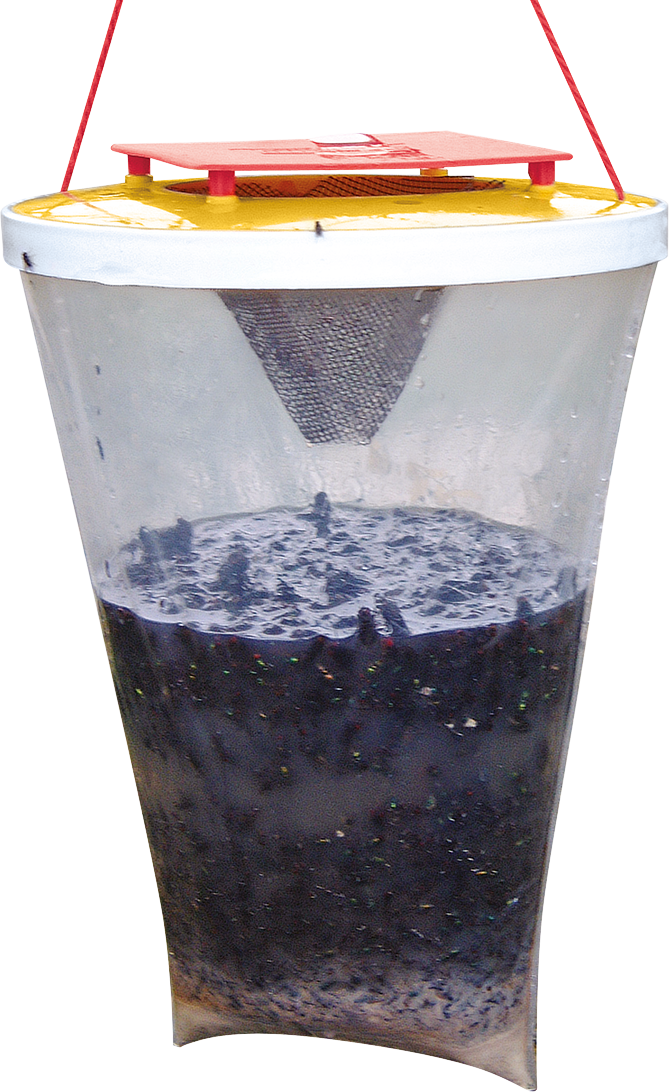
Optimal Trap Placement for Maximum Capture Rates
05.12.2024 / Tips
Even the best-designed fly trap will underperform if it is placed in the wrong spot. The good news is that a few simple rules can dramatically increase how many flies your RedTop trap captures—and how quickly you see a difference.
Rule 1: Place Traps Between Flies and People/Animals
Think of flies as moving in lines between three things: where they breed, where they feed, and where they rest. Your goal is to position traps in that travel corridor, but away from people and animals.
- Locate likely breeding areas: manure piles, waste bins, compost, wet feed.
- Identify where you want comfort: patios, doors, stables, animal housing.
- Place RedTop traps between these zones, 10–20 meters away from people and animals.
Rule 2: Use Sunlight to Your Advantage
RedTop lures work best when warm. Sunlight speeds fermentation and increases odour strength:
- Choose a spot with several hours of direct sun per day.
- Avoid deep shade unless heat is extreme in your region.
- Hang traps so air can flow freely around them.
Rule 3: Height and Airflow Matter
Flies tend to fly at or slightly above body height of animals and people. Placing traps roughly 1.5–2 meters above ground level captures them in their normal flight zone.
Check local wind patterns:
- Place traps downwind from breeding sites and animal housing.
- Let the wind carry the lure odour across the area you want to protect.
Rule 4: Use Enough Traps for the Area
In heavy-pressure environments like poultry farms or large stables, a single trap is rarely enough. A practical guideline:
- Households and small gardens: 1–2 traps.
- Small stables or hobby farms: 2–4 traps.
- Commercial farms or intensive livestock units: install traps in a grid or perimeter pattern.
Rule 5: Keep Traps Attractive
As traps fill, they actually become more attractive—up to a point. If they are allowed to overflow or dry out, capture rates will drop.
- Top up water if levels drop significantly due to evaporation.
- Replace traps when they are full or at the end of their service life.
- Avoid placing traps too close to competing odours like strong disinfectants.
Adapting Placement Over Time
Environments change over a season. Manure may be moved, animals rotated, or weather patterns shift. Review your trap locations every few weeks:
- If one trap is consistently fuller than others, you may be close to a key travel path—add a second trap in that zone.
- If a trap remains almost empty, adjust its position slightly towards breeding or feeding sites.
Correct placement turns RedTop from a simple gadget into a powerful management tool. With a few smart choices, you can significantly reduce fly pressure while keeping the trap itself out of the way.
