The Hidden Cost of Flies in Farms & Livestock Operations
01.12.2024 / Business
On many farms, flies are treated as an inevitable summer problem—annoying, but not a priority. However, research and field experience show that uncontrolled fly populations can have a significant financial and welfare impact on livestock operations.
Stress and Animal Welfare
Constant fly pressure is a source of stress for cattle, poultry, pigs, and horses. Animals waste energy flicking, stomping, and moving away from feeding areas simply to avoid irritation.
- In dairy herds, flies around legs and udders can reduce time spent feeding or resting.
- In poultry units, high fly pressure increases restlessness and pecking behaviour.
- In horses, flies around eyes, wounds, and sensitive areas lead to constant agitation.
Feed Efficiency and Weight Gain
Stress and reduced feeding time translate directly into poorer feed conversion and slower weight gain. Even small daily losses add up when multiplied across hundreds or thousands of animals over an entire season.
Hygiene, Reputation, and Compliance
Flies are not just a problem inside the unit. They travel to neighbouring properties, public roads, and nearby homes. Complaints from neighbours or visitors can trigger inspections or pressure from regulators and retailers.
- High fly populations around manure or waste areas can be seen as signs of poor hygiene.
- Visitors, auditors, and customers may form quick negative impressions.
- In some regions, authorities expect active fly management as part of environmental or welfare standards.
Direct Disease and Pathogen Risk
Flies can mechanically spread bacteria and other pathogens as they move between manure, feed, animals, and buildings. While they are rarely the only factor in disease outbreaks, they can increase background contamination pressure.
The Economics of Doing Nothing
When the costs above are combined—lower performance, extra labour, complaints, potential penalties—the impact of ignoring fly control can be far higher than the cost of implementing a simple trapping program.
Because these losses are spread across many areas (growth rate, milk yield, carcass quality, labour time), they are often under-estimated or written off as 'normal'.
RedTop Traps as a Business Tool
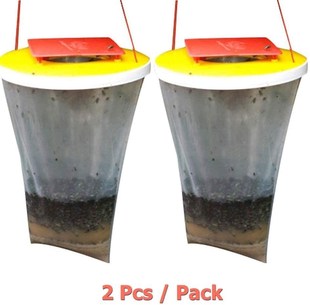
RedTop traps are a straightforward way to reduce background fly pressure across a site:
- They can be deployed quickly around manure, slurry, and waste-handling areas.
- They require no electricity and minimal labour once installed.
- They demonstrate to auditors and neighbours that you take fly management seriously.
Integrating Traps into a Management Plan
For best results, traps should be combined with good housekeeping:
- Regular removal or covering of manure and waste.
- Attention to wet organic matter where larvae can develop.
- Use of RedTop traps to intercept adult flies moving around the site.
Seen from a business perspective, fly control is not a cosmetic option but a protective measure for productivity, welfare, and reputation. RedTop traps help farms take that protection seriously without adding chemical burden to the operation.
